Kalamata
Cartes Postales from GreeceKalamata is both a stop on the narrator’s journey through Greece and a place where music, local memory, and everyday welcome interrupt a period of grief. Its modest streets and museums matter less for postcard beauty than for the sense of authenticity and human connection the narrator finds there.
Setting and Character
Kalamata has a dilapidated port, a main square about a kilometre from the sea, a thriving café scene, an old quarter, and a castle. The town is not described as conventionally picturesque; its appeal lies instead in its authenticity. In mid-October, a final spell of warmth before winter gives the narrator’s visit a gentle, transitional atmosphere.
The narrator considers two possible associations behind the town’s name: kalamatia, meaning lovely eyes, and the mati, an eye believed to ward off evil. The uncertainty suits a place whose attractions resist a single neat explanation. Although guidebooks may dwell on its port and exports, or on less inviting aspects of town life, the narrator finds that visitors in a hurry can miss its particular charm.
The Narrator’s Visits
Kalamata first enters the journey through its airport. After the person the narrator had expected to meet fails to arrive, the narrator waits there for twenty-four hours, then leaves without knowing where to go. A cleaner offers food, and the narrator later drives until reaching the sea and finding a place to stay. Weeks afterward, in a better frame of mind, the narrator returns to Kalamata intending to visit its archaeological museum. The return makes the town part of a gradual resumption of travel rather than simply the setting of disappointment.
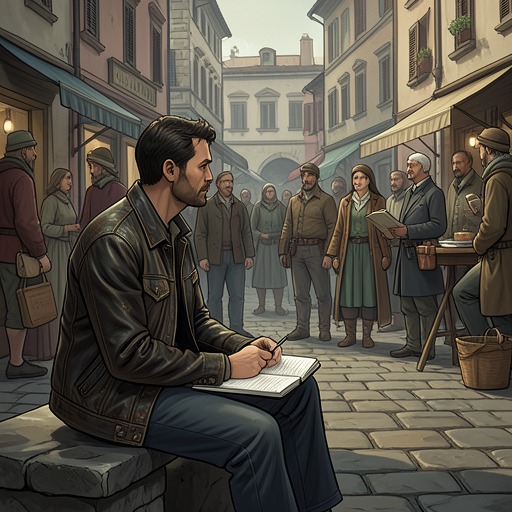
During the later visit, the narrator goes to the archaeological and military museums, explores the town, sits in cafés, and visits a train museum filled with disused railway carriages. The residents seem especially friendly, and their smiles leave the narrator with a fond impression of people aware of their good fortune. The town does not erase the earlier hurt, but being there helps lift the narrator’s spirits; for a time, the narrator feels almost happy.
Antoni and the Town’s Musical Memory
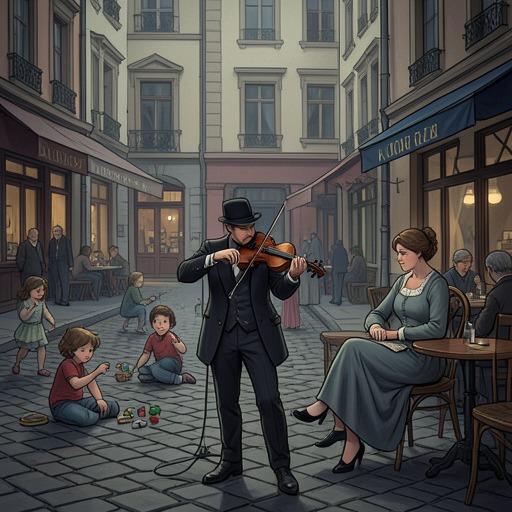
A story about Kalamata’s past reaches the narrator through a kiosk owner. When a busker plays nearby, the owner laments that no one measures up to Antoni, a musician who visited the town some years earlier and left a lasting impression. The tale begins with the stationmaster, who keeps track of strangers arriving and departing, noticing a distinctive man step off a train from Corinth with a battered violin case. On feast days, itinerant bouzouki and klarino players are familiar in Kalamata, but Antoni’s appearance and music mark him as different.
The story’s later account of Antoni and Magda gives this local memory an intimate scale: for one night, music connects two people and makes them happy. The narrator imagines Magda keeping the violin’s metal G string as a reminder, and understands her joy as belonging to the experience itself, despite its brevity. The town thus preserves Antoni not only as a musician against whom later performers are judged, but as the source of a story about a fleeting connection.
Music, Memory, and Departure
The tale of Antoni and Magda also changes the narrator’s relation to music. After months of avoiding it because it stirred strong feelings, the narrator downloads Bach sonatas, including Air on a G String, and begins listening again in the car. The return to music is gradual, likened to a convalescent person reintroducing richer food. Kalamata’s remembered story becomes part of that tentative recovery, offering an image of happiness that need not last forever to have value.
After about a week in what the narrator calls a gentle, unpretentious town, the journey continues north to Patras. Kalamata’s significance rests in this combination of departure and return: it is linked first to an airport disappointment, then to renewed curiosity, friendly encounters, and a story that helps the narrator make room for music again.